A lifetime of discovery.
Care for every chapter.
Support your box turtle with a varied diet, a secure habitat, and veterinary care tailored to its species.
About 200–600 g
Females: 5–7 years
Some reach 30–40+
A small turtle with a long-term commitment.
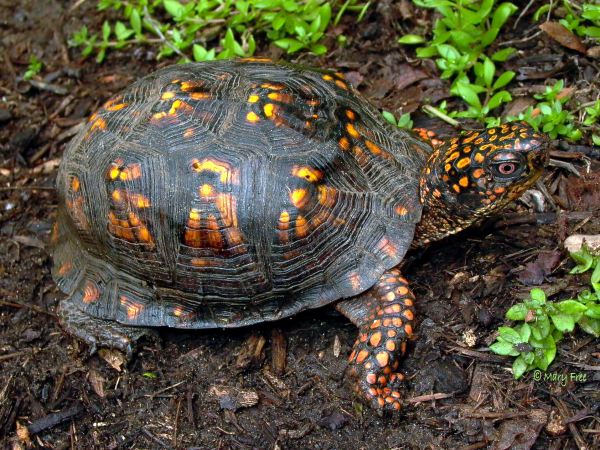
North American box turtles belong to the genus Terrapene. Their domed upper shell and hinged lower shell help protect them when they withdraw inside.
Eastern, Gulf Coast, three-toed, and ornate box turtles do not all have identical needs. Identify your turtle before choosing its temperature, moisture, and feeding plan.
Nutrition and environment
A varied omnivore diet
- Offer an appropriate mixture of plant and animal foods. Age and species influence the balance; growing turtles often eat more animal material.
- Include varied leafy greens and vegetables, with fruit a smaller part of the plant selection. Offer suitable captive-raised invertebrates such as earthworms and crickets.
- Do not rely on dog food or a single favorite ingredient as the foundation of the diet. Ask the team to review portions and food choices.
- Discuss calcium and vitamin supplements with your veterinarian; avoid combining products without guidance.
- Serve meals on a clean dish to limit bedding ingestion. Provide fresh food and water daily.
Room to explore and retreat
- Provide a spacious, escape-resistant enclosure with hiding places, shade, and room to walk and forage. Protect against digging out and predators entering.
- Outdoor housing may work when weather and species needs allow; provide safe indoor accommodation when conditions are unsuitable.
- Choose clean, moisture-retaining substrate appropriate for the species. Avoid cedar, pine shavings, and dusty materials.
- Provide a shallow soaking dish with easy entry and exit. Replace soiled water promptly.
- Keep dogs and cats away, and minimize unnecessary handling. Never lift or pull a turtle by its limbs.
Warmth, moisture, and UVB
EBH’s existing guide describes a basking area around 85–90°F (29–32°C), with cooler areas available. Confirm the complete temperature range for your turtle’s species and health.
Use reliable thermometers and controlled heating. Offer a moisture gradient and protected humid retreat where appropriate, without leaving the whole enclosure waterlogged. Check humidity with a hygrometer.
Indoor turtles need suitable reptile UVB lighting. Follow the lamp manufacturer’s distance and replacement instructions; visible light does not indicate remaining UVB output. Glass and plastic block useful UVB.
Small changes deserve attention
EBH recommends examinations every 6–12 months, annual fecal screening, and blood tests when indicated. Bring enclosure photographs, lighting details, diet information, and recent weight records.
Common medical concerns
- The original EBH guide highlights pneumonia, swollen eyes, ear abscesses, parasites, skin problems, retained eggs, and traumatic injuries.
- Arrange care for nasal discharge, eye swelling, appetite loss, abnormal droppings, shell changes, or unusual inactivity.
- Females can lay eggs without a male. Ask about nesting needs; straining, weakness, or persistent digging with poor appetite warrants assessment.
Responsible turtle ownership
- Choose a legally obtained, captive-bred turtle. Do not remove wild turtles or release a pet into the wild; wildlife rules vary by location and species.
- Wash hands after contact with turtles or their equipment. Keep supplies away from food-preparation areas.
- Turtles can carry Salmonella even when they look healthy. Young children and people with weakened immune systems need particular protection.
General education only; individual veterinary advice takes priority. Size and maturity ranges are retained from the existing EBH profile and vary by species and individual. Weight is not a universal target. Maturity means sexual maturity, not a recommended breeding age. Lifespan varies widely and may exceed the values shown.
References: EBH original Box Turtle portfolio; VCA: Owning Box Turtles; VCA: Feeding Box Turtles. More information: EBH reptile resources.
Thoughtful care for your box turtle.
Request preventive care or call about a change in your turtle’s health.