Curious explorers.
Thoughtful care.
A secure home, appropriate meals, and regular veterinary care help your corn snake thrive at every stage of life.
Weight varies with size
A familiar North American reptile.
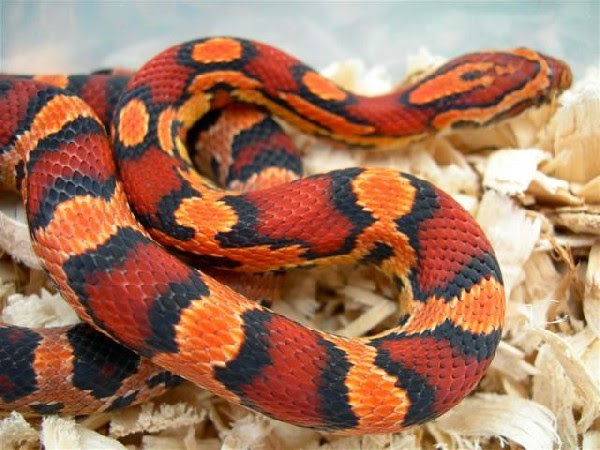
The corn snake, Pantherophis guttatus, is a nonvenomous constrictor native to parts of the United States. Wild individuals often have orange or brown backgrounds with darker blotches; captive-bred color varieties can look very different.
Corn snakes explore, climb, and use sheltered retreats. Many become comfortable with gentle handling, but they still need hiding places and time without disturbance.
Feeding and a secure environment
Appropriate whole-prey meals
- Offer appropriately sized, commercially sourced frozen-thawed rodents. Ask the team to tailor prey size and feeding intervals to age, weight, and body condition.
- Avoid live rodents: they can bite and seriously injure a snake. Seek guidance if your snake will not accept thawed prey.
- Thaw prey safely, warm it appropriately, and use feeding tongs. Do not microwave prey or handle it near food-preparation surfaces.
- Provide fresh drinking water and remove spoiled food promptly. Record meals, refusals, shedding, and weight changes.
- Allow at least 48 hours after a meal before handling, and contact the hospital for regurgitation or repeated food refusal with weight loss.
Room to stretch and explore
- Use an escape-resistant enclosure with secure doors, ventilation, and no accessible gaps around cables.
- Provide enough floor space for the snake to fully straighten, along with safe climbing structures. Upgrade housing as it grows.
- Offer snug hides in both warm and cool areas so the snake does not have to choose between security and temperature.
- Choose a suitable cleanable substrate and remove waste promptly. Avoid cedar and other aromatic wood products.
- House individually to simplify monitoring and prevent unwanted breeding or competition. Keep other pets away.
A gradient of warmth and shelter
Provide a warm area and a cooler retreat using thermostatically controlled equipment. Check temperatures with reliable instruments at snake level, and ask your veterinarian to confirm targets for the setup.
Protect against contact with heating equipment and avoid hot rocks. Maintain a consistent day/night cycle. Discuss suitable low-level UVB, shade, and lamp placement with the team, especially for light-sensitive color varieties.
Monitor humidity with a hygrometer. A clean humid hide can support shedding, while ventilation and routine cleaning help prevent a persistently wet environment.
Keep track of your snake’s normal
EBH recommends reptile examinations every 6–12 months and annual fecal screening. Bring feeding records, enclosure photographs, and temperature and humidity readings.
When to call the hospital
- Report weight loss, repeated regurgitation, persistent food refusal, abnormal droppings, swelling, mites, or wounds.
- Mouth discharge, wheezing, or unusual breathing need prompt assessment. Do not assume every appetite change is related to shedding.
- Females lay eggs and may develop reproductive problems. Straining or unusual swelling warrants veterinary advice.
Gentle handling and hygiene
- Support the snake along its body, allow it to move calmly, and never lift or restrain it by the tail.
- Avoid handling immediately after arrival, during a difficult shed, or while it is digesting a meal.
- Wash hands after contact with snakes, prey, or enclosure equipment. Keep supplies away from kitchen surfaces.
General education only; individualized veterinary advice takes priority. Length and lifespan ranges reflect the original EBH profile. Weight depends on age, length, and body condition. Maturity combines the old page’s 18–24 and 18–36 month ranges and means sexual maturity, not a recommended breeding age.
Further care information: EBH reptile resources and snake-feeding handouts.
Thoughtful care for your corn snake.
Request preventive care or call about a change in your reptile’s health.