Built for swimming.
Cared for for life.
Clean water, a dry basking area, balanced nutrition, and regular veterinary care support your turtle through decades of life.
Males: 7–9 inches
Males: 2–4 years
Aquatic explorers with specialized needs.
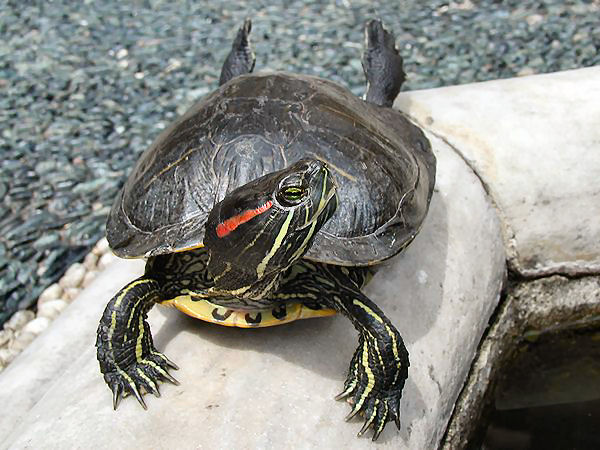
The red-eared slider, Trachemys scripta elegans, is a semiaquatic turtle known for the red patch behind each eye. Its appearance can darken with age.
Sliders alternate between swimming and basking. They depend on their environment to regulate body temperature and need both suitable water and a fully dry resting area.
Water quality and balanced meals
A habitat made for swimming
- Provide a spacious aquatic enclosure with room to swim, turn, and surface comfortably. Increase capacity as your turtle grows.
- Use effective filtration and regular partial water changes. Test water quality rather than judging cleanliness by appearance alone.
- Provide a stable basking platform that supports the whole turtle above water and is easy to climb onto.
- Protect heaters and intakes, prevent entrapment, and keep the enclosure escape-resistant. Avoid swallowable gravel.
- House individually when possible. Sliders can injure tank mates; a particular male-to-female ratio does not prevent aggression.
Nutrition changes with age
- Use an appropriate aquatic-turtle pellet as part of a varied diet, alongside suitable leafy greens and safe aquatic plants.
- Growing turtles generally eat more animal material, while adults need a greater plant contribution. Ask the team to tailor portions and feeding frequency.
- Do not rely on dried shrimp, meat, or one favorite food as the entire diet. Discuss suitable additional animal foods and calcium sources with your veterinarian.
- Offer food in water so your slider can swallow normally, and remove leftovers to protect water quality.
- Monitor growth and body condition; frequent begging does not necessarily mean more food is needed.
Warm water, dry basking, and UVB
Provide appropriate water warmth and a warmer basking area, with temperatures checked using reliable instruments. Ask your veterinarian to confirm targets for your turtle’s age and health.
Use thermostatically controlled heating and protect against burns. Position basking heat and suitable reptile UVB so the turtle can use both while completely out of the water.
Follow the lamp manufacturer’s distance and replacement guidance. Glass and plastic block useful UVB, and a bulb that still shines may no longer provide adequate UVB. Maintain a regular day/night cycle.
Watch swimming, appetite, and shell health
EBH recommends reptile examinations every 6–12 months and annual fecal screening. Bring enclosure photographs, water-test results, temperature readings, and diet and lighting details.
Signs that deserve attention
- Report swollen eyes, nasal discharge, appetite loss, unusual shell softness, foul odor, wounds, or persistent abnormal buoyancy.
- Tilting while floating or difficulty diving can accompany illness and should be assessed promptly.
- Females can develop eggs without a male. Discuss nesting access and seek care for straining, weakness, or reproductive concerns.
Safe handling and hygiene
- Support the shell securely with both hands during necessary handling. Never lift by the tail or limbs.
- Turtles can carry Salmonella even when healthy. Wash hands after contact and keep habitat equipment out of kitchens.
- Young children and people with weakened immune systems require particular protection. Do not kiss turtles or allow them near faces.
General education only; individualized veterinary advice takes priority. Shell-length and maturity ranges are retained from the existing EBH profile and vary by individual. Maturity means sexual maturity, not recommended breeding age. Lifespan varies; the old profile’s shorter fact-card range has been broadened to reflect its discussion of turtles living around 30 years.
More care information: EBH reptile resources and aquatic-turtle care handouts.
Thoughtful care for your slider.
Request preventive care or call about a change in your turtle’s health.