Big personalities.
A lifetime of care.
From a growing hatchling to a powerful adult, your Sulcata needs room to roam, a grass-based diet, and thoughtful veterinary care.
65–100+ lb
A small hatchling becomes a very large commitment.
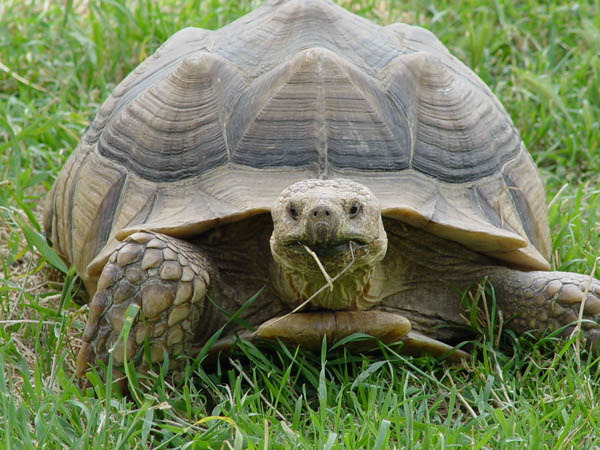
The African spurred tortoise, Centrochelys sulcata, comes from the dry Sahel region along the southern edge of the Sahara. Burrows provide shelter from extreme heat and access to more humid conditions.
Adults are strong grazers and enthusiastic diggers. Plan for decades of housing, food, veterinary care, and safe transport—not just the needs of a small youngster.
Grazing, hydration, and room to move
Build meals around grasses
- Make suitable grasses and grass hay the foundation of the diet, with safe weeds and leafy plants for variety. This preserves the high-fiber focus of EBH’s original guide.
- Avoid routine fruit, sugary foods, and animal protein. Do not feed dog or cat food.
- Offer only correctly identified, nontoxic plants from areas free of pesticides and other contaminants.
- Ask your veterinarian to tailor calcium supplementation and portions to growth, diet, lighting, and body condition.
- Keep clean drinking water available in a shallow container with easy access. Do not assume a desert tortoise can live without water.
A secure habitat for a powerful digger
- Provide a large, securely enclosed area for walking and grazing. Plan barriers against both pushing and digging; inspect the perimeter regularly.
- Supply shade, shelter, and protection from predators. Keep dogs away even when they appear friendly.
- Provide a heated shelter or suitable indoor accommodation when outdoor weather does not meet your tortoise’s needs.
- Prevent access to pools, steep drops, cords, toxic plants, and loose objects that could be swallowed.
- Young tortoises need a carefully managed environment with adequate moisture and hydration—not a uniformly hot, dry enclosure.
Warmth and UVB throughout the year
Provide a controlled basking area, cooler retreat, and species-appropriate overnight warmth. Ask the team to confirm temperature targets for your tortoise’s age and housing; a single minimum temperature does not describe a complete setup.
Use reliable thermometers and thermostatically controlled heating. Protect against direct contact with hot equipment and check temperatures at tortoise level.
Indoor housing requires suitable reptile UVB. Follow the manufacturer’s installation distance and replacement schedule. A bulb can still shine after its useful UVB output has declined. Outdoor sunlight must be paired with shade and safe temperatures.
Track growth and changes early
Schedule regular examinations and ask about parasite screening and other tests. Bring diet details, temperature readings, lighting information, and enclosure photographs. Call ahead to arrange safe handling and transport for a large adult.
Health concerns to watch
- Report reduced appetite, weight loss, nasal discharge, breathing changes, weakness, or unusual shell changes.
- Diet, hydration, UVB, temperature, and growth all deserve review when shell development is abnormal. Appearance alone cannot establish the cause.
- Straining, reduced waste output, or tissue protruding from the vent needs assessment. Females may produce eggs without a male.
Handling and household safety
- Support the body fully during necessary handling. Never lift by the legs or tail; ask for help rather than attempting to lift a heavy adult alone.
- Wash hands after handling your tortoise or cleaning its habitat, and keep reptile equipment out of food-preparation areas.
- Arrange a long-term care plan with someone prepared for the animal’s size and lifespan. Never release a pet tortoise into the wild.
General education only; individualized veterinary advice takes priority. Size, maturity, and lifespan values are approximate and based on the existing EBH profile. Adults can exceed the size and weight shown. Maturity means sexual maturity, not recommended breeding age.
Care resources: EBH reptile resources and Sulcata care handout; Merck Veterinary Manual: Reptile management and husbandry.
Thoughtful care for your Sulcata.
Request preventive care or call about a change in your tortoise’s health.