Big personality.
Thoughtful lifelong care.
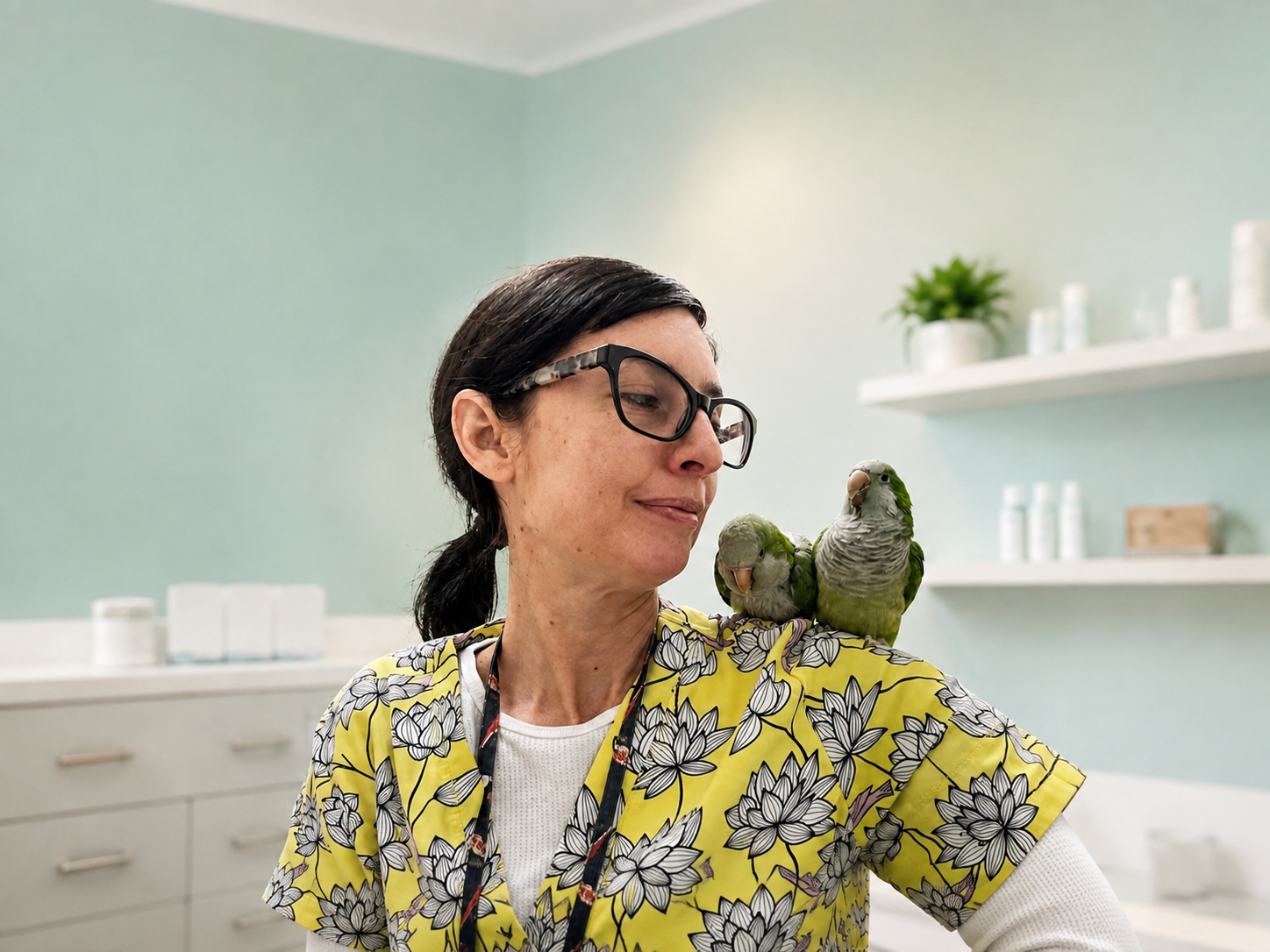
Quaker parrots—also known as monk parakeets—are intelligent, social, expressive companions whose health depends on balanced nutrition, daily enrichment, respectful training, and preventive avian care.
& 127–140 g
Social, clever companions with remarkable voices.
Quaker parrots are highly social, intelligent birds known for their active personalities, strong bonds, and impressive ability to learn words and household sounds. They thrive with consistent interaction, clear routines, and opportunities to explore and solve problems.
Companion Quakers need supervised exercise, foraging and chewing opportunities, adequate sleep, safe housing, and regular examinations with an avian veterinarian. Some individuals can become protective of their enclosure, so patient positive-reinforcement training is especially valuable.
Nutrition and behavior
Diet & nutrition
- Use a nutritionally complete formulated diet as the foundation unless your veterinarian recommends otherwise.
- Offer veterinarian-guided vegetables and other appropriate fresh foods; use seeds, nuts, and treats in limited, purposeful amounts.
- All-seed diets are commonly deficient in essential nutrients and may contribute to obesity and liver disease.
- Provide fresh water and clean dishes daily, monitor appetite and droppings, and check body weight regularly.
Behavior & enrichment
- Quaker parrots are social, active birds that benefit from predictable routines and respectful daily interaction.
- Foraging, positive-reinforcement training, climbing, chewing, and destructible toys provide essential stimulation.
- Offer safe supervised exercise outside the enclosure and rotate carefully inspected toys regularly.
- Provide a calm, consistent sleep schedule and a secure environment away from fumes and household hazards.
- Cage territoriality can occur; use positive-reinforcement training and avoid punishment or forced handling.
- New screaming, biting, withdrawal, or feather damage may have medical or environmental causes and deserves professional evaluation.
Natural history
Quaker parrots are native to parts of South America, including Bolivia, Brazil, and Argentina. Established feral flocks also live in several regions outside their native range.
Unlike many parrots, wild Quakers build large communal stick nests. Individual pairs maintain separate chambers within the shared structure, reflecting the species’ strong social organization and problem-solving ability.
Their flock instincts, powerful beaks, and active minds help explain why companion Quakers value communication, routine, social connection, safe chewing materials, and varied enrichment.
Common health concerns
Quakers may hide signs of illness. Changes in appetite, droppings, activity, breathing, voice, posture, feather condition, or behavior deserve prompt attention.
This guide provides general educational information and does not replace an examination or individualized veterinary advice.
Specialized care for your Quaker parrot.
Schedule preventive care or contact our team if you have concerns about your bird’s health.