Beautiful song.
Attentive care.
Active, observant songbirds whose wellness depends on balanced nutrition, clean air, safe flight space, predictable routines, and preventive avian care.
12–30 g
Expressive birds known for color and song.
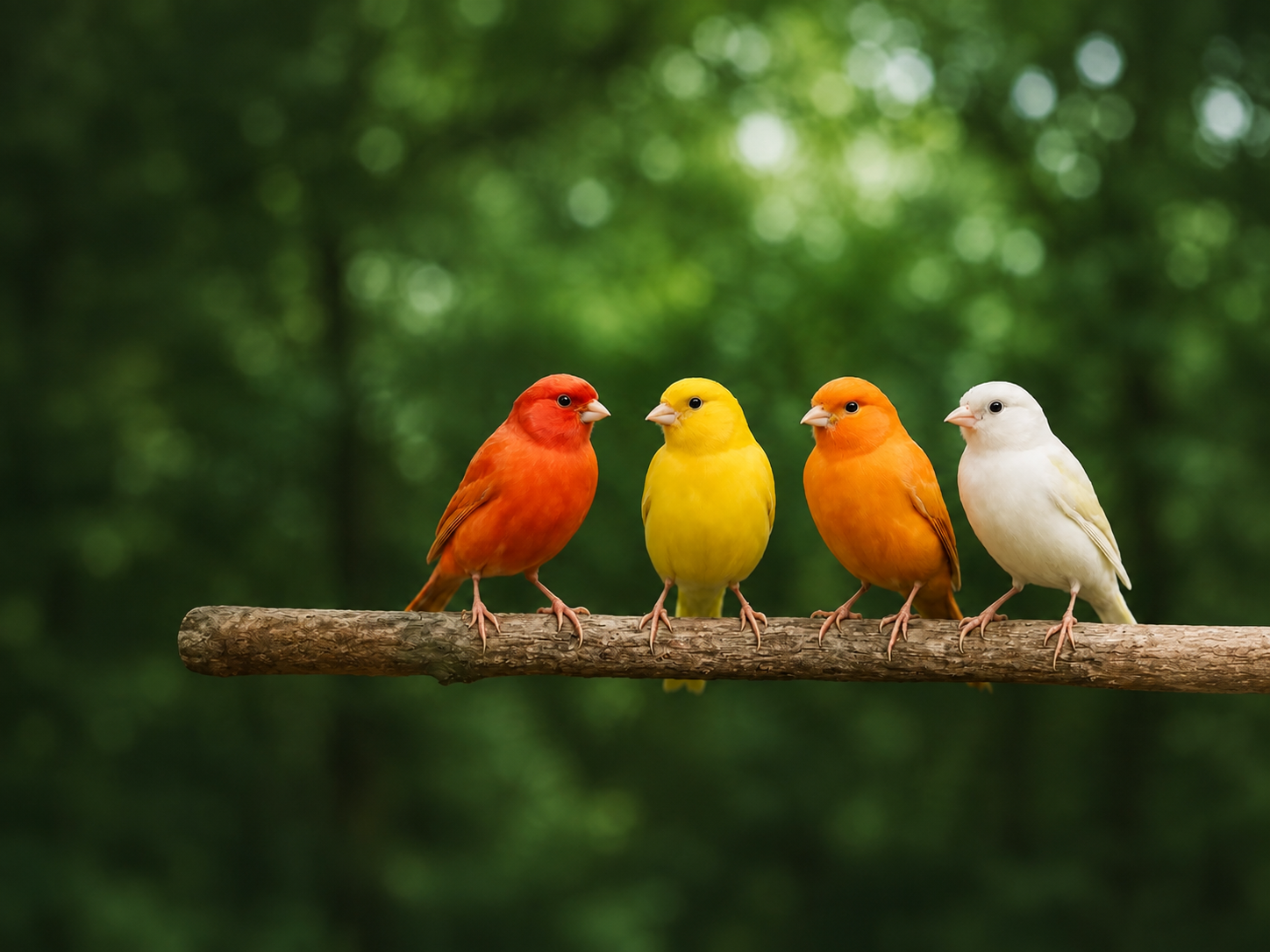
Domestic canaries descend from wild canaries of the Canary Islands, Madeira, and the Azores. Generations of selective breeding have produced song, color, and type varieties with different appearances and vocal qualities.
Canaries are commonly enjoyed as observation birds. Many prefer calm interaction over handling, and adult males are generally the strongest singers—although song varies with age, season, molt, health, environment, and individual temperament.
Nutrition and environment
Diet & nutrition
- Use a nutritionally balanced canary diet as recommended by an avian veterinarian.
- Offer appropriate leafy greens, vegetables, and other fresh foods in suitable portions.
- Avoid relying on seed alone; selective eating may contribute to vitamin, mineral, and protein deficiencies.
- Provide clean water daily and wash dishes carefully to reduce contamination.
- Monitor weight on a gram scale, particularly during illness, molt, diet changes, or breeding activity.
Housing & enrichment
- Choose a wide enclosure that permits short horizontal flights and unobstructed movement.
- Use varied natural-diameter perches while keeping food and water protected from droppings.
- Offer bathing opportunities and simple, safe enrichment without overcrowding the flight area.
- Maintain a stable day-night schedule and protect against drafts, overheating, smoke, aerosols, and nonstick-cookware fumes.
- Consider temperament and space carefully before housing canaries together; territorial conflict can occur.
Song, season, and molt
Canary song is influenced by hormones, daylight, age, genetics, environment, and health. A temporary decrease may occur during the annual molt, when energy is directed toward replacing feathers.
Molt should still be monitored closely. Poor feather quality, prolonged molt, weight loss, weakness, breathing changes, or loss of appetite are not simply normal seasonal changes.
Artificially long daylight periods and access to nest-like spaces may stimulate reproductive behavior. A veterinarian can help manage repeated egg laying or other hormone-related concerns.
Common health concerns
Because canaries may hide illness, routine examinations and careful observation are valuable. Small birds can decline rapidly once outward signs become obvious.
This guide provides general education and does not replace an examination or individualized veterinary advice. Size and lifespan vary by breed, sex, and individual.
Specialized care for your canary.
Schedule preventive care or contact our team if you notice changes in song, behavior, breathing, or appetite.