Small parrots.
Powerful bonds.
Bright, intelligent, energetic companions whose health depends on balanced nutrition, safe socialization, daily enrichment, and preventive avian care.
40–60 g
Curious companions with big personalities.
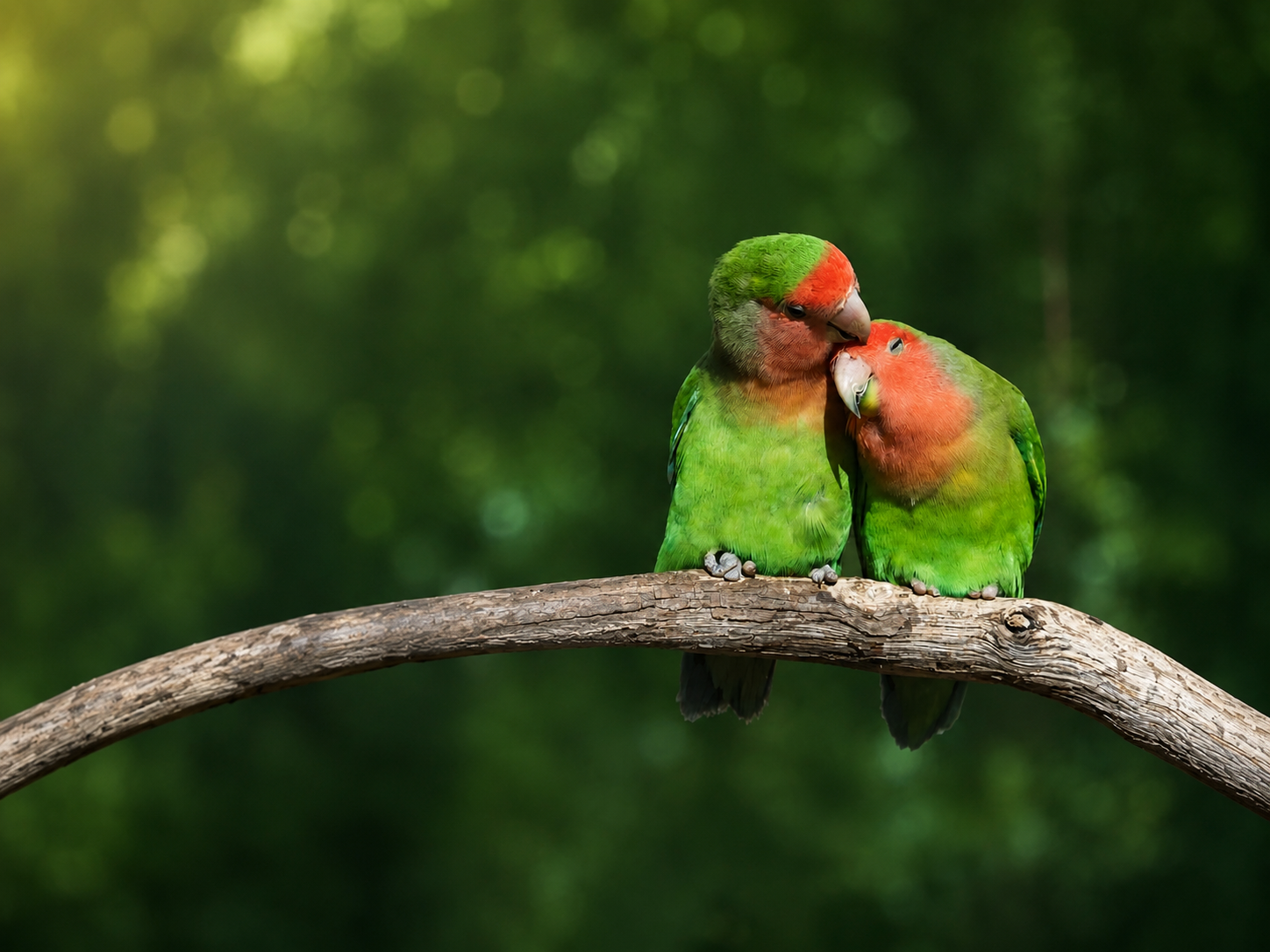
Lovebirds are small African parrots known for their playful energy, strong social relationships, and determined personalities. Common companion species include peach-faced, Fischer’s, and masked lovebirds.
A lovebird can bond closely with another bird or with people. Pairing is not automatically required, but every bird needs reliable companionship, thoughtful socialization, safe exercise, and an environment that supports natural behaviors.
Nutrition and enrichment
Diet & nutrition
- Use a nutritionally complete formulated diet as the foundation unless your veterinarian advises otherwise.
- Offer appropriate vegetables, leafy greens, and other veterinarian-approved fresh foods.
- Limit seeds, nuts, and high-calorie treats; seed-only diets can contribute to obesity and nutrient deficiencies.
- Provide clean water and freshly washed food and water dishes every day.
- Track body weight on a gram scale and report meaningful changes promptly.
Behavior & environment
- Provide a secure enclosure with room to climb, flap, play, and move between varied perches.
- Offer safe chewing, shredding, foraging, bathing, and positive-reinforcement training opportunities.
- Supervise time outside the enclosure and protect against windows, doors, fans, fumes, hot surfaces, and other pets.
- Avoid punishment; biting, screaming, or territorial behavior may reflect fear, hormones, environment, or illness.
- Provide a consistent sleep routine and avoid nest-like huts or dark cavities unless directed for medical reasons.
Natural history
Lovebirds belong to the genus Agapornis. Most species are native to sub-Saharan Africa, while the grey-headed lovebird comes from Madagascar.
Wild lovebirds are active, social foragers. Their strong beaks, quick movement, flock communication, and pair relationships help explain their need for social contact, safe chewing materials, flight opportunities, and mental stimulation.
The name “lovebird” reflects their close social behavior, but compatibility is never guaranteed. Introductions should be gradual and supervised.
Common health concerns
Seek veterinary attention for reduced appetite, weight loss, fluffed posture, breathing changes, weakness, abnormal droppings, vomiting, injury, feather damage, or a sudden behavioral change.
This guide provides general education and does not replace an examination or individualized veterinary advice. Measurements and lifespan vary by species and individual.
Specialized care for your lovebird.
Schedule preventive care or contact our team if you notice changes in your bird’s health.