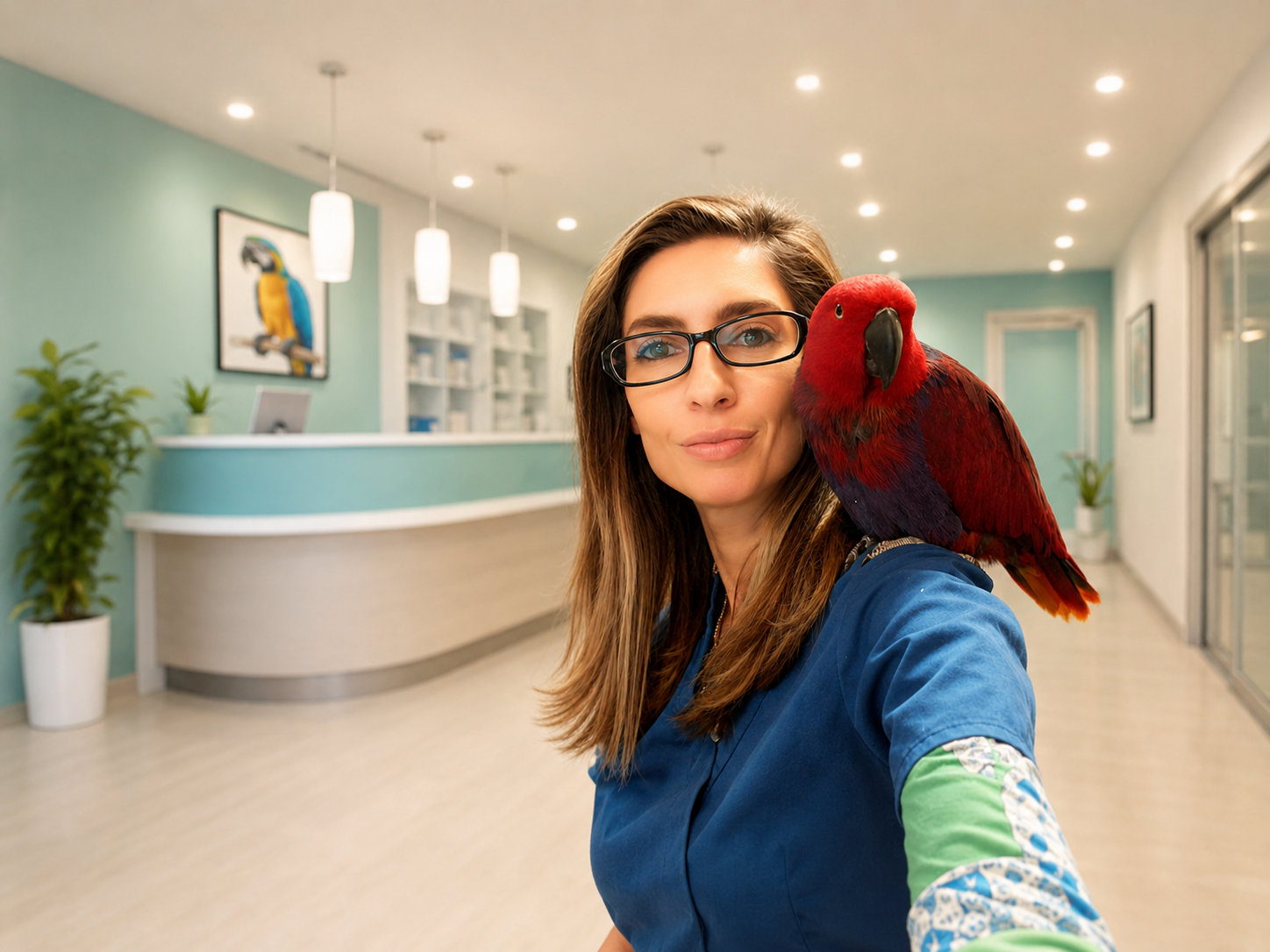

Bold personalities. Brilliant companions.
Macaws are intelligent, social parrots with specialized nutritional, behavioral, environmental, and veterinary needs.
200–1,500 g
Large: 5–7 years
Remarkable birds with significant needs.
Macaws are among the most intelligent and beautifully colored parrots, and they include the largest companion-bird species. Although native to Mexico and Central and South America, high-quality companion birds in the United States are now available from breeders.
Common large macaws include blue-and-gold, scarlet, green-winged, and hyacinth macaws. Their size, noise level, need for space, and extensive daily care mean they are not suitable for every household.
Nutrition and behavior
Diet & nutrition
- Free-ranging macaws eat seeds, fruit, figs, palm nuts, leaves, nectar, and flowers, depending on the species.
- Some species have higher dietary-fat requirements; hyacinth macaws naturally consume palm nuts.
- Parrots hull seeds before eating and do not require grit. Excessive grit consumption may cause dangerous impaction.
- All-seed diets are deficient in protein, vitamins, and minerals, including calcium and vitamin A.
Behavior & enrichment
- Large macaws are often gentle, but every macaw can be noisy and destructive.
- Scarlet macaws may have particularly strong personalities and can challenge inexperienced owners.
- Macaws are highly intelligent and need substantial daily mental and physical stimulation.
- Foraging is a normal part of parrot life. Encourage safe play, exploration, training, and food-search activities.
- The bare facial skin may flush pink as the bird’s mood changes.
Natural history
Macaws occupy varied habitats across large areas of the Amazon Basin, including gallery forests and mangrove swamps.
Many species are listed under CITES Appendix I. Blue-and-gold, green-winged, Hahn’s, noble, red-bellied, severe, and yellow-collared macaws are listed under Appendix II.
Appendix I includes species threatened with extinction and generally prohibits commercial international trade. Appendix II regulates trade to help prevent species from becoming threatened.
Common health concerns
Macaws may hide signs of illness. Changes in appetite, droppings, activity, breathing, voice, posture, feather condition, or behavior deserve prompt attention.
This guide provides general educational information and does not replace an examination or individualized veterinary advice.
Specialized care for your macaw.
Schedule preventive care or contact our team if you have concerns about your bird’s health.