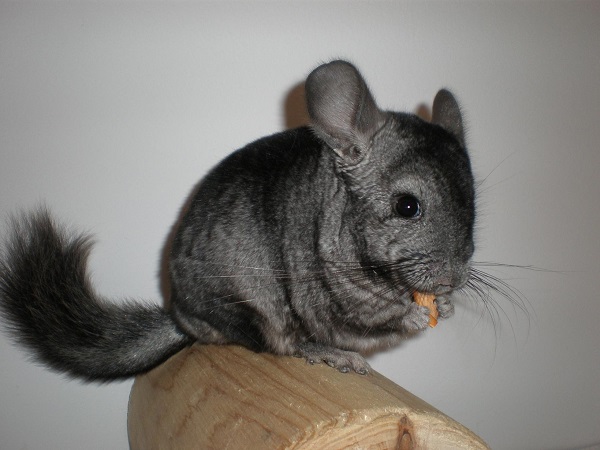
Soft fur.
Spirited companions.
Discover thoughtful care for your chinchilla—from everyday nutrition and enrichment to preventive veterinary visits.
About 400–600 g
Small companions.
A lasting commitment.
A chinchilla’s daily care plan should fit its individual needs. Bring questions about food, housing, handling, and behavior to your veterinary visit.
Keep a simple record of weight, appetite, droppings, and activity. Share changes with your veterinarian rather than waiting for a routine appointment.
Nutrition and environment
Fiber comes first
- Make good-quality grass hay the main food, supplemented with chinchilla-specific pellets.
- Ask your veterinarian to tailor portions and any treats to your pet.
- Provide fresh water and check that the bottle or bowl is working and clean.
- Review any planned food changes with the veterinary team.
Room to explore
- Provide a spacious enclosure with safe levels, hiding places, and secure footing.
- Offer suitable chew toys and supervised exercise in a chinchilla-proof area.
- Protect electrical cords and remove items your pet could swallow.
- Avoid plastic exercise balls. Allow quiet daytime rest.
Cool, comfortable surroundings
Chinchillas are sensitive to heat, particularly when humidity is high. Keep their enclosure away from direct sun and discuss suitable temperature control with your veterinarian.
Include your chinchilla in household power-outage and evacuation plans. Know where you can move your pet if indoor conditions become unsafe.
Suspected overheating, collapse, or breathing difficulty requires immediate veterinary attention.
Know when to call
Contact a veterinarian promptly for reduced eating, fewer droppings, drooling, weight loss, or signs of pain. Dental and digestive disorders need professional evaluation.
General education only; this guide does not replace an examination or individualized advice. Adult weight and maturity vary; 20 years is a possible lifespan, not a guarantee.
Care references: Merck Veterinary Manual: Chinchillas · Housing and enrichment · Biological data
Thoughtful veterinary care for your chinchilla.
Request preventive care or call our team about a change in your pet’s health.