Clever minds.
Close companions.
Support your rats with compatible companionship, an enriching home, balanced nutrition, and regular veterinary care.
Males: 450–520 g
Varies by sex and individual
Social animals who thrive on interaction.
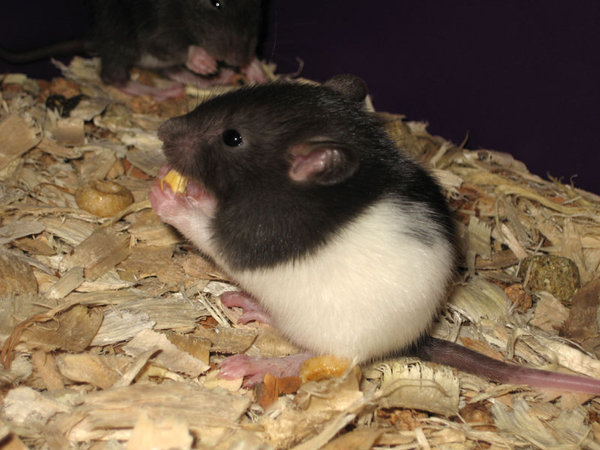
Domestic rats are intelligent, curious companions. They benefit from compatible rat company as well as regular, gentle interaction with their people.
Keep compatible pairs or small groups, with introductions planned carefully. Fighting can occur; watch for injuries, persistent chasing, or a rat being prevented from eating or resting.
Nutrition and an engaging home
Balanced meals
- Use a complete rat-formulated block or pellet as the foundation of the diet.
- Offer suitable vegetables and small amounts of fruit; keep seeds and other calorie-dense treats limited.
- Introduce dietary changes gradually. Ask the team about portions rather than restricting protein or calories on your own.
- Keep clean water available at all times. Inspect drinking bottles daily for blockage or leaks.
Housing and enrichment
- Provide a spacious, well-ventilated enclosure with solid resting surfaces, safe levels, and hiding places.
- Offer paper or cardboard for nesting, suitable climbing opportunities, and supervised activity outside the cage.
- Use absorbent, low-dust bedding such as paper or aspen. Avoid strongly scented bedding and cedar.
- Clean soiled areas regularly and protect rats from smoke, sprays, overheating, drafts, and abrupt temperature changes.
- If using a wheel, choose a solid running surface large enough to avoid bending the back or tail.
Preventive care at every stage
EBH’s existing care guidance recommends physical examinations every 6–12 months, annual fecal checks, and blood testing as advised by the veterinarian. Your rat’s age and health may call for more frequent visits.
Bring recent weights, a diet list, and enclosure photos. Mention changes in breathing, appetite, activity, grooming, or mobility.
Discuss spaying or neutering and safe group composition with the team to prevent unplanned litters.
Common health concerns
The original EBH portfolio highlights respiratory infections, dental problems, head tilt, obesity, kidney disease, salivary gland inflammation, parasites, and mammary tumors. Daily observation helps you recognize concerns early.
General education only; this guide does not replace individualized veterinary advice. Weight ranges are retained from EBH’s existing profile and are approximate, not target weights for every rat. Maturity refers to sexual maturity, not recommended breeding age. Lifespan and development vary.
Additional care references: Merck: Pet rats · Health concerns · Development
Thoughtful care for your rats.
Request preventive care or call about a change in your pet’s health.