Big voices.
Gentle companions.
Social, expressive herbivores whose wellness depends on vitamin C, abundant grass hay, dental care, compatible companionship, and close monitoring of appetite and breathing.
1.5–2.5+ lb
Social animals with specialized nutritional needs.
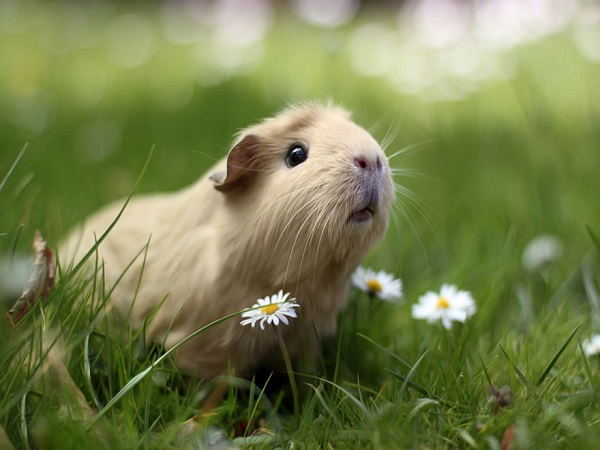
Guinea pigs—also called cavies—are vocal, social prey animals native to South America. They communicate with whistles, purrs, body posture, movement, appetite, and daily routines.
Like people, guinea pigs cannot produce their own vitamin C. They also have continuously growing teeth and a digestive system built for steady intake of fiber, making diet and daily observation central to preventive care.
Nutrition and environment
Hay, pellets & vitamin C
- Provide unlimited good-quality grass hay as the foundation of the adult diet unless your veterinarian advises otherwise.
- Feed measured guinea-pig pellets that contain stabilized vitamin C and store them as directed to maintain freshness.
- Offer veterinarian-approved leafy greens and vegetables, including appropriate vitamin-C sources.
- Do not add vitamin C to drinking water unless specifically directed; light and water can reduce stability and alter intake.
- Provide clean water daily and monitor appetite, stool, and body weight on a gram scale.
Housing & companionship
- Provide generous single-level floor space, solid footing, soft bedding, hiding places, and supervised exercise.
- Guinea pigs usually benefit from compatible companionship, but introductions and sex combinations require planning.
- Offer hay-based foraging, tunnels, shelters, and safe chewable items while avoiding exercise wheels and balls.
- Keep housing dry and clean to protect feet, skin, and respiratory health.
- Protect guinea pigs from heat, drafts, falls, predators, rough handling, and unsafe interactions with other pets.
Dental and digestive health
All guinea-pig teeth grow continuously. Hay chewing helps normal wear, but inherited jaw shape, diet, injury, or disease can cause painful dental overgrowth that may not be visible at the front of the mouth.
High-fiber food intake supports normal gastrointestinal movement. Reduced eating may quickly become serious and can be caused by dental pain, respiratory disease, urinary problems, stress, or other illness.
Drooling, a wet chin, selective eating, dropping food, smaller stools, or gradual weight loss deserves veterinary evaluation.
Common health concerns
Seek prompt veterinary care for appetite loss, breathing difficulty, severe diarrhea, urinary straining, blood in urine, abdominal swelling, weakness, injury, or signs of pain.
This guide provides general education and does not replace an examination or individualized veterinary advice. Size, maturity, and lifespan vary by sex and individual.
Specialized veterinary care for your guinea pig.
Schedule preventive care or contact our team promptly when appetite, stool, breathing, or behavior changes.